
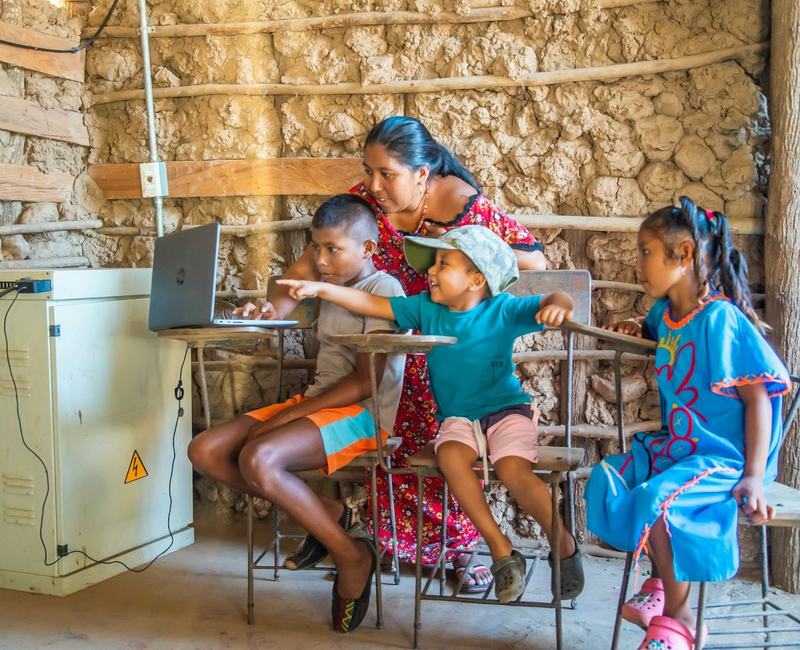
Access Gap
The access gap is about getting online at all: having a device, a connection, and being able to afford both.
Worldwide, 2.2 billion people are still offline.1 In high-income countries, 94% of people use the internet; in low-income countries, 23% do. In towns and cities, 85% are online; in rural areas, 58%.1 Even where there's a signal, mobile data is unaffordable in around 60% of low- and middle-income countries.1
It isn't only a problem far away. In the UK, 6% of adults have no internet at home, rising to 21% of over-65s, and to 15% of households in lower-paid or no work, compared with 2% of professional and managerial households.2 Many of those offline still depend on it: 43% have asked someone else to do something online for them.2 Almost a quarter of UK households struggled to afford their phone and internet bills in early 2025.3 Cheaper "social tariffs" exist for people on Universal Credit and other benefits, but fewer than 1 in 10 eligible households use one, and 70% have never heard of them.4
Cost isn't the only barrier. Older devices stop getting security updates, and services are often designed without the people who'll use them.
We work on the parts of this gap within our reach: training and support, built around the barriers above.
Sources
- ITU, Facts and Figures 2025 (November 2025). ↩︎
- Ofcom, Adults' Media Use and Attitudes Report 2025 (May 2025). ↩︎
- Ofcom, Communications Affordability Tracker (January 2025). ↩︎
- Ofcom, Pricing and Consumer Engagement Report 2025. ↩︎