
Accessibility
Disabled people are often shut out by design: websites, apps, and services built without them in mind.
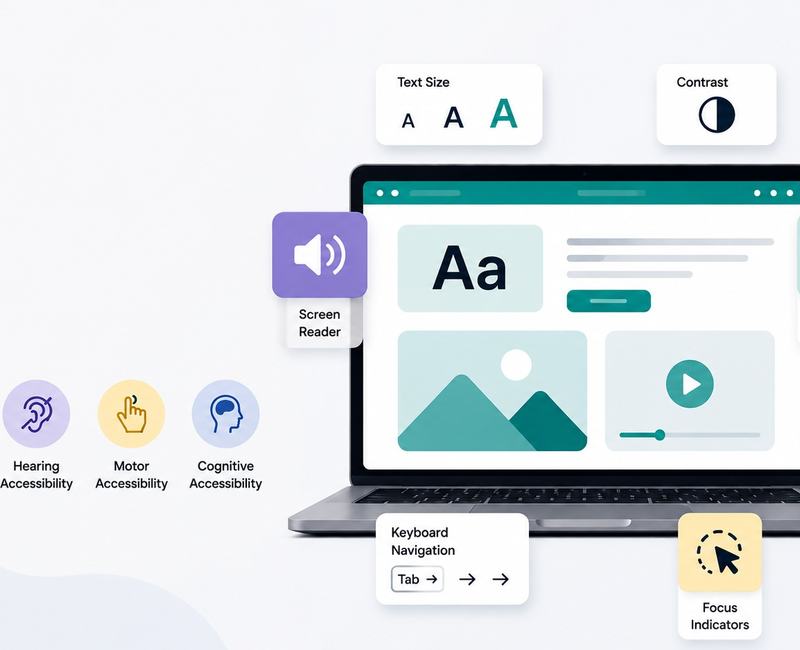
About 1.3 billion people, 1 in 6 worldwide, experience significant disability.1 Yet 95.9% of the million most-visited home pages fail basic accessibility checks, and in 2026 that figure got worse after six years of small improvements.2 Most failures are the same six problems every year, such as text too faint to read and images with no description for screen readers.2
In the UK, 91% of adults without an impairment can do all the basic tasks needed to get online, compared with 74% of disabled adults, and around 6 in 10 of those with a vision, hearing, or mobility impairment.3 Part of that gap is built in: a task is harder when the tool wasn't designed to work with a screen reader, captions, or without a mouse.
We raise accessibility in our training: the standards already exist, the most common fixes are well known, and applying them is the responsibility of whoever builds the service.
Sources
- WHO, Disability fact sheet (March 2023). ↩︎
- WebAIM, The WebAIM Million 2026 (February 2026 data). ↩︎
- Lloyds Banking Group and Ipsos, Essential Digital Skills 2025. ↩︎